Moving to a new city often brings excitement — but for many newcomers in Dubai, it also brings a beauty crisis. In this episode of the Dream Girl podcast, host Sheen sat down with Doctor Hasia to pull back the curtain on the "Dubai Face" phenomenon, debunk viral skincare trends, and discuss the realities of the aesthetics industry.
The "Dubai Effect": Why Your Skin and Hair Are Struggling
If you've moved to the UAE and noticed your hair falling out in clumps or your skin breaking out, you are not alone. Doctor Hasia identifies two primary culprits.
First: the desert climate. No matter how many buildings are up, you are living in an arid desert environment. Second: harsh water. The water quality can be incredibly tough on the skin and scalp.
Many patients find the most success washing their hair with bottled mineral water to prevent extreme hair loss. Shower filters can help with skin dryness — but for hair, the mineral content of UAE tap water is a different problem entirely.
Doctor HasiaDebunking the Myths: Is Korean Skincare a Scam?
In one of the most discussed moments of the interview, Doctor Hasia addressed the viral obsession with Korean skincare. Her verdict: be cautious.
Regulation issues. Regulations in some regions are not as tight as in the UK, USA, or UAE. Doctor Hasia cited past instances where Korean sunscreens marketed as SPF 50 were independently tested and found to offer protection as low as SPF 15.
The better alternative. For sun protection, Doctor Hasia recommends European — specifically French — sunscreens, which utilise more advanced UV-filter technology and undergo rigorous independent testing.
The Essentials: A Science-First Routine
Doctor Hasia is a self-described science nerd with little patience for 10-step influencer routines. To her, skincare is not a one-size-fits-all game. If you want results, she says, focus on these non-negotiables.
- Sunscreen. The single most important product for the rest of your life — full stop.
- Retinoids. The gold standard for anti-ageing. Doctor Hasia recommends starting around age 21, when collagen production begins declining by approximately 1% annually.
- Cleansing balm. Unlike gels or micellar waters, oil-based balms effectively break down makeup and sebum without disrupting the skin barrier.
- Vitamin C. For brightening, antioxidant protection, and supporting collagen synthesis during the day.
Retinol vs. Tretinoin — The Distinction That Matters
Doctor Hasia clarifies that "retinoid" is the umbrella term. Over-the-counter retinol is popular, but retinoic acid — tretinoin — is significantly more potent, working directly at the receptor level without needing to be converted by the skin first.
Tretinoin is liquid gold. Cher has used it since the 1960s. That is not a coincidence.
Doctor HasiaThe Ethics of Aesthetics: Avoiding the "Copy-Paste" Face
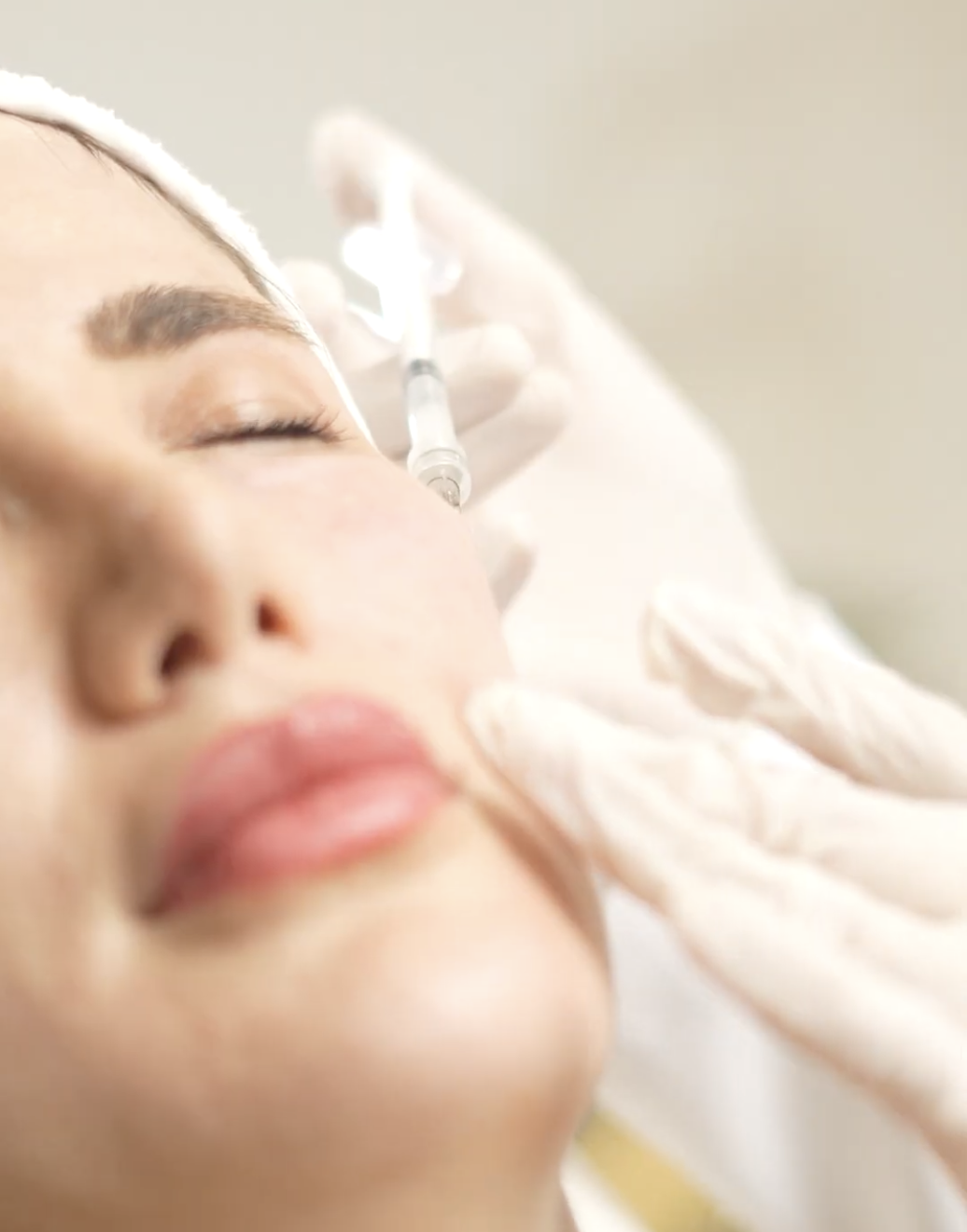
A major point of discussion was the prevalence of overfilled faces across Dubai — the "copy and paste" look of super-filled cheeks and pointed chins that has become recognisable in certain circles of the city.
The greed problem. Doctor Hasia was candid: some practitioners prioritise revenue over patient wellbeing, leading to results that are clinically excessive and aesthetically dehumanising.
Her philosophy. Her approach is about subtle enhancements. If a procedure will look abnormal or doesn't suit a patient's individual features and structure, she simply declines. The consultation is as important as the treatment itself.
Reversing bad work. Bad fillers can be dissolved. You can start fresh with a more holistic, natural approach — and Doctor Hasia sees many patients who come to her specifically to undo previous work.
Beyond the Surface: Internalised Colonialism and Skin Whitening
The conversation also covered deeper societal territory, including the South Asian obsession with skin lightening — a subject Doctor Hasia approaches with both clinical precision and personal honesty.
She highlights the generational weight of colonialism that equated lighter skin with power, beauty and social mobility — a framework that continues to shape beauty ideals across many cultures today.
As a doctor, she draws a firm clinical distinction: whitening — often achieved through unsafe or unproven products — is not the same as brightening, which involves treating hyperpigmentation caused by sun damage, hormones or post-inflammatory changes. Her goal is to help patients feel confident in their own skin, not to erase it.